
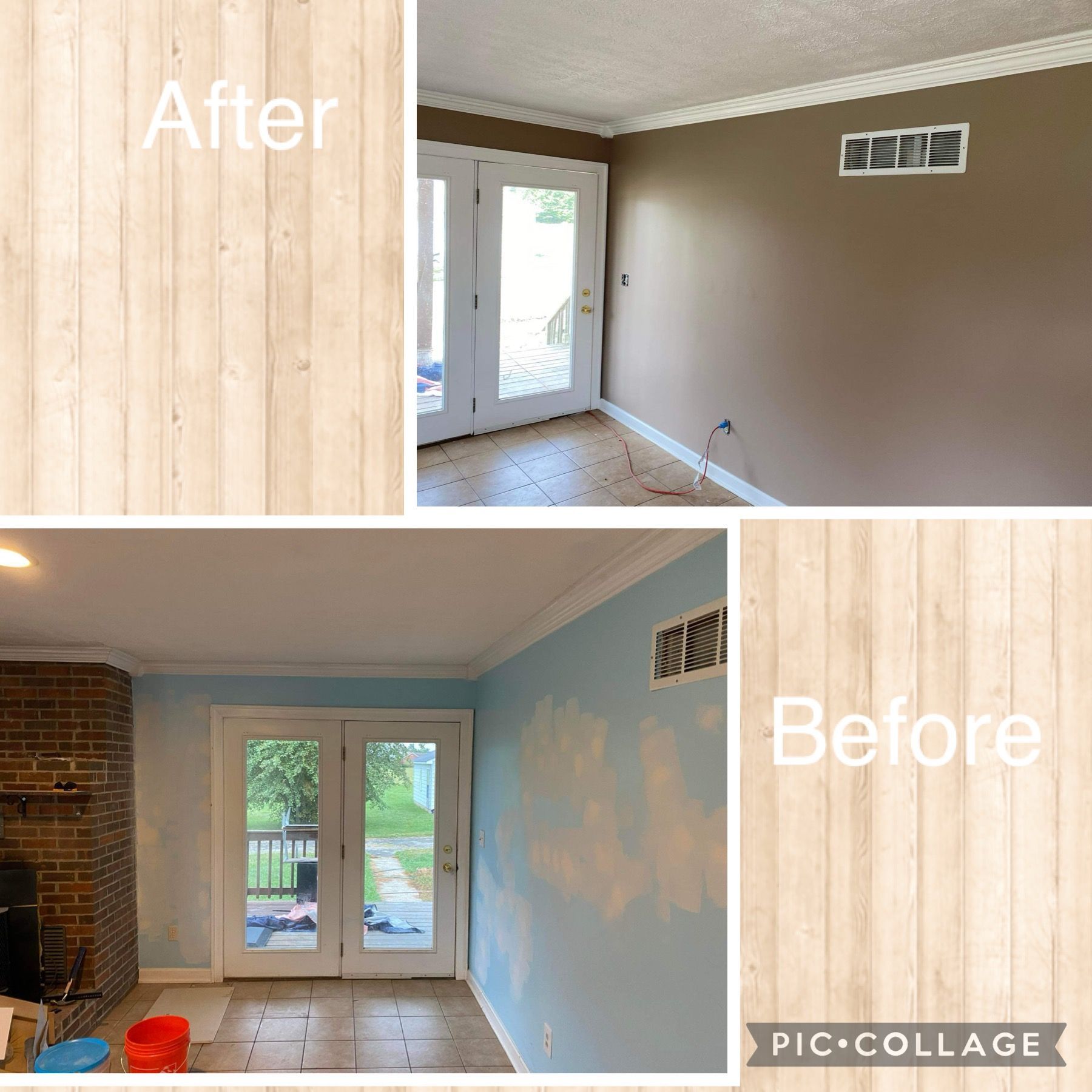
Surfaces Protected Through Proper Preparation and Application
Painting Services in New Albany for properties requiring interior updates, exterior protection, or complete color refreshes
Paint failures show up as peeling sections on exterior trim, discolored interior walls where moisture has penetrated, or uneven coverage that reveals underlying surface imperfections. Interior and exterior painting work addresses these issues through detailed surface preparation, proper primer selection, and application techniques that account for substrate conditions. Properties throughout Southern Indiana and Northern Kentucky face humidity fluctuations and seasonal moisture exposure that affect how paint adheres and performs over time.
NXT LVL Remodels provides painting services for residential and commercial properties, handling wall preparation that includes patching damaged areas, sanding rough surfaces, and sealing porous substrates before finish coats are applied. Drywall finishing work ensures smooth transitions between repaired sections and existing surfaces, while trim painting requires precise edgework and multiple coats for uniform coverage on high-contact areas.
Request a painting estimate to evaluate surface conditions and determine preparation requirements for your interior or exterior project in New Albany, Jeffersonville, Sellersburg, and surrounding areas.
How Surface Preparation Determines Paint Performance
Paint application success depends on removing loose material, filling cracks and holes, addressing moisture sources, and creating uniform surface texture before any finish product is applied. Exterior surfaces require power washing to remove dirt and mildew, scraping to eliminate failing paint, and caulking to seal gaps where water intrusion occurs. Interior walls need patching where fasteners have damaged drywall, sanding where texture is uneven, and priming where stains or previous colors might bleed through new finishes.
Once painting is complete, you see consistent color coverage without streaking or thin spots, clean lines where walls meet trim or ceilings, and surfaces that resist moisture penetration and wear from daily contact. Exterior finishes protect wood and composite materials from weathering, while interior coatings refresh living spaces and provide cleanable surfaces that resist staining. The work eliminates visual distractions caused by patched areas or color inconsistencies.
Painting projects vary from single-room touch-ups that match existing colors to complete exterior repainting that updates curb appeal and extends material lifespan. Commercial buildings often require faster turnaround and coordination around business hours, while residential projects may include color consultation, finish selection guidance, and phased scheduling across multiple rooms. Deck and structure painting involves stain or sealer application rather than traditional paint products.
Common Questions About Painting Projects
Property owners typically want clarity on preparation methods, timing considerations, and what affects finish durability.
What wall preparation happens before painting begins?
Damaged drywall sections are patched and sanded smooth, nail pops and cracks are filled, surfaces are cleaned to remove dust and grease, and primers are applied where bare substrate is exposed or where previous finishes might interfere with adhesion.
How does regional humidity affect paint application and drying?
Higher humidity in New Albany slows solvent evaporation and extends drying times between coats, requires attention to ventilation during interior projects, and influences product selection toward formulations that cure properly in moisture-rich environments without trapping water vapor.
Why do exterior surfaces fail faster on certain exposures?
South and west-facing walls receive more UV exposure and heat cycling, accelerating paint degradation, while north-facing areas retain moisture longer and encourage mildew growth, requiring different maintenance intervals and sometimes different product specifications.
When should trim be repainted separately from walls?
Trim painting requires different application techniques, often uses semi-gloss or gloss finishes for durability and cleanability, and may need more frequent repainting in high-contact areas like doorways and window frames where wear occurs faster than on wall surfaces.
What does complete repainting include versus touch-up work?
Complete repainting covers all surfaces in a defined area with uniform new coats after full preparation, while touch-ups address isolated damage or wear spots by blending repairs into existing finishes without recoating entire walls or sections.
NXT LVL Remodels handles painting projects for properties where surface protection and appearance updates are needed. Contact the company at (812) 304-7783 to discuss your interior or exterior painting requirements and schedule an estimate based on current surface conditions.